Highwater Drill
Three-act judge path
Watch the authority boundary hold.
Use the controls or focus this section and press the arrow keys.
Loading proof…
Loading the proof.
Evidence ledger
Inspect the source behind each boundary.
Live provider receipt
Check the provider path.
Run one bounded read from AWS Lambda through Managed MCP to CockroachDB.
- AWS
- —
- CockroachDB
- —
- Source
—- Observed
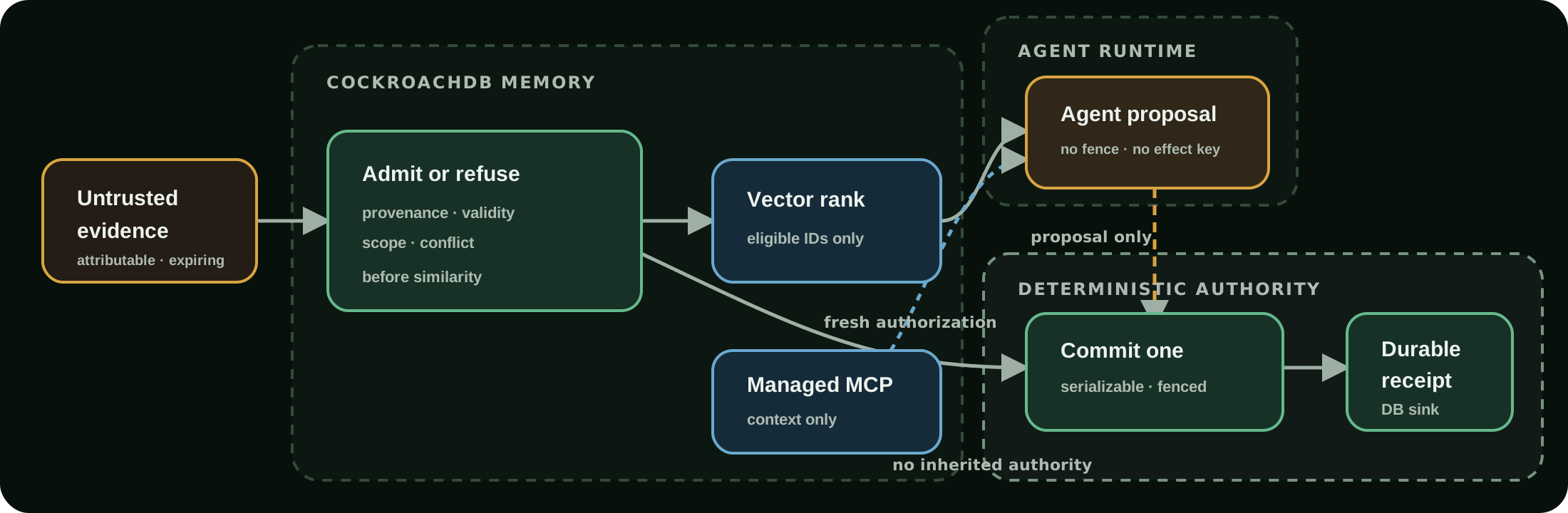
Admit before ranking
Current, scoped, provenance-valid evidence enters retrieval. Expired, invalid, and out-of-scope records do not.
Inspect ambiguity evidenceCommit one outcome
Models may propose. A separate authority boundary decides which bounded operation receives a durable receipt.
Inspect authority evidenceRecover context, not power
A successor can recover signed context while the right to act remains absent until independently authorized.
Inspect recovery evidenceTrust architecture
Relevance can suggest. Only admissibility can authorize.
Evidence, authority, and recovery remain distinct.
Invariant register
Every transition must preserve the boundary.
Open the register to inspect all eleven checks.
Loading checks… View every invariant
Read the proof
A synthetic crisis drill with inspectable source identity.
The Highwater Drill uses synthetic emergency-response data to expose the difference between remembered evidence and permission to act. Follow the exact scenario, source identity, and file hashes below.